
E-Mobility
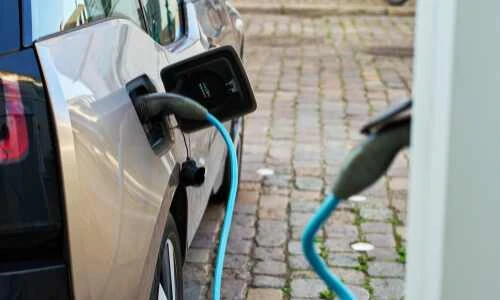
This innovation focuses on introducing e-mobility into public infrastructure and vehicle fleets. A key part of it is building the necessary charging infrastructure (both AC and DC stations), connecting it to renewable energy sources, using battery storage and integrating it into smart grids. Electric vehicles help reduce greenhouse gas emissions and noise and improve air quality, which is why they are seen as an essential part of sustainable mobility in public administration. On a larger scale, the system can be linked to energy management, which makes it possible to optimise energy use over time.
The innovation builds on the megatrends of transport decarbonisation, clean mobility and the digitalisation of infrastructure. It responds to European commitments under the Green Deal.
Charging stations: factors to consider
The technology includes charging stations (AC 3–22 kW, DC 50–350 kW and above), wallboxes for company and semi-public use, power management software (smart charging), battery storage, energy flow management systems and, where applicable, V2G functions. DC chargers for buses can reach up to 600 kW, but they are usually installed as dual units (with two outlets) that share the power between them. The configuration (such as a payment terminal, access interface or smart control) has a major effect on the price of the equipment. The technology must match the power capacity available at the site.
Charging time depends on the type of station: 4–10 hours for AC (usually 11 kW) and 20–60 minutes for DC (150 kW), or even less at higher outputs. A key factor is the power capacity available at the site. For larger infrastructure (for example, for electric buses), the cost of the grid connection and construction work (excavation and cabling) can exceed the cost of the technology itself. A proper design depends on the number of vehicles, the battery type, the required charging speed and how the vehicles are operated (daily mileage, planned availability and so on).
Limitations of the Innovation
The main barriers include limited power capacity at some sites, the need to coordinate with the distribution system operator and the demanding preparation of infrastructure (excavation and permitting procedures). Low demand in some regions, slower acceptance by users and a lack of operating experience can also be barriers. For more complex installations (for example, for electric buses), it is essential to check the options for connecting to the grid and to take into account other costs beyond the technology itself (such as road modifications).
Prepared by ICOK, 2025