
Solar Carports
Solar Carports
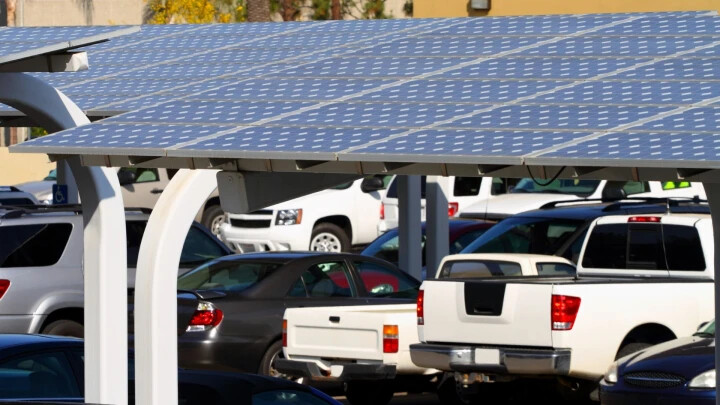
Solar carports are structures that combine roofing over parking spaces with electricity generation from photovoltaic panels. They are freestanding support structures, usually made of steel or aluminium, with PV panels mounted on top. Carports serve two purposes: they protect parked vehicles from the weather, and they make efficient use of existing paved surfaces to generate renewable energy without taking up more land. The solution is especially suitable for car parks at public buildings, hospitals, schools, local authority offices and transport hubs.
The innovation is in line with trends in decarbonisation, decentralised energy generation and smart use of built-up land. It fits with European goals for expanding renewable energy, supporting electromobility and reducing the public sector’s carbon footprint. Carports are also seen as part of modern energy infrastructure that helps bring photovoltaics into the everyday operation of cities and regions.
PV panels can be combined with battery storage or EV charging stations
The technical and structural basis consists of the carport’s support structure, the PV panels, inverters, switchboards and a connection to the distribution grid or to the building’s internal power system. The structures can be single-row or double-row, with the panel tilt varying according to the orientation of the car park. The panels can be standard or bifacial. Bifacial panels also generate electricity from reflected light. The system can be extended with battery storage, EV charging stations and smart controls for generation and consumption.
Installed capacity usually ranges from a few kWp to several tens of kWp, depending on the size of the car park and the technology used. Annual electricity generation is the same as for standard PV installations of similar capacity. The structures last around 25–30 years, and panels typically last more than 25 years. The system is modular and can be expanded step by step as needed.
Limitations of the Innovation
The main limitations and barriers include higher purchase costs than conventional rooftop installations, the need for a building permit and coordination with land-use planning. Structural design is a significant factor because of wind and snow loads. Further barriers may include limited grid connection capacity, or the need to deal with rainwater drainage and safety in the car park.
Prepared by ICOK, 2026