
Adaptive Lighting Control
Adaptive Lighting Control
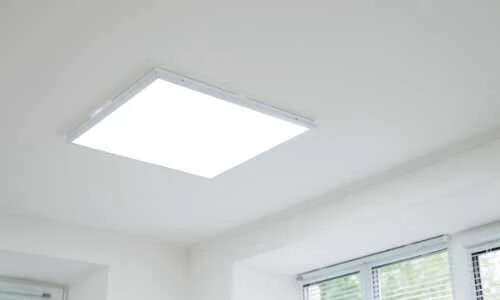
Adaptive lighting is an intelligent control system for a building’s lighting that automatically adjusts light levels based on current conditions: whether people are present, how much daylight there is, the time of day and how the space is being used. The technology combines sensors, controllers and dimmable LED luminaires. The solution delivers direct energy savings and also improves visual comfort. The systems can run as standalone systems (for example, in renovations with no structural work) or as part of a central BMS, and they suit both new buildings and renovations.
The technology reflects the megatrends of digitalisation, automation, smart infrastructure and sustainable construction. It contributes to the EU’s decarbonisation goals and responds to the growing focus on indoor environmental quality and on how light affects human health. It also supports efforts to reduce light pollution in cities.
Savings of up to 60%
The innovation is built on dimmable LED luminaires, occupancy and light-level sensors, controllers and communication interfaces (such as Bluetooth, DALI and KNX). Control units measure reflected light and adjust the output of each luminaire. In standalone systems, the luminaires communicate with each other, so the existing building structure does not need to be altered. Central systems can be connected to other infrastructure (for example, CO₂ monitoring). The system can be managed locally (with a controller or an app) or centrally.
Adaptive lighting typically saves 30–60% compared with fixed lighting. LED luminaires last more than 50,000 hours, which means 10–15 years in office spaces. The system stays powered at all times as standard, even in standby mode. Control units allow predictive control based on the time of day or how the space is used. The system can be configured individually to suit the type of building.
Limitations of the Innovation
The main barriers include higher upfront investment, the need to coordinate with other building systems, building managers’ limited knowledge of what smart control can do, and possible incompatibility with older infrastructure (which may need data integration). Drawbacks of the solution include the risk of false motion detection, power use in standby mode and, above all, the need for adequate cybersecurity protection.
Prepared by ICOK, 2025